
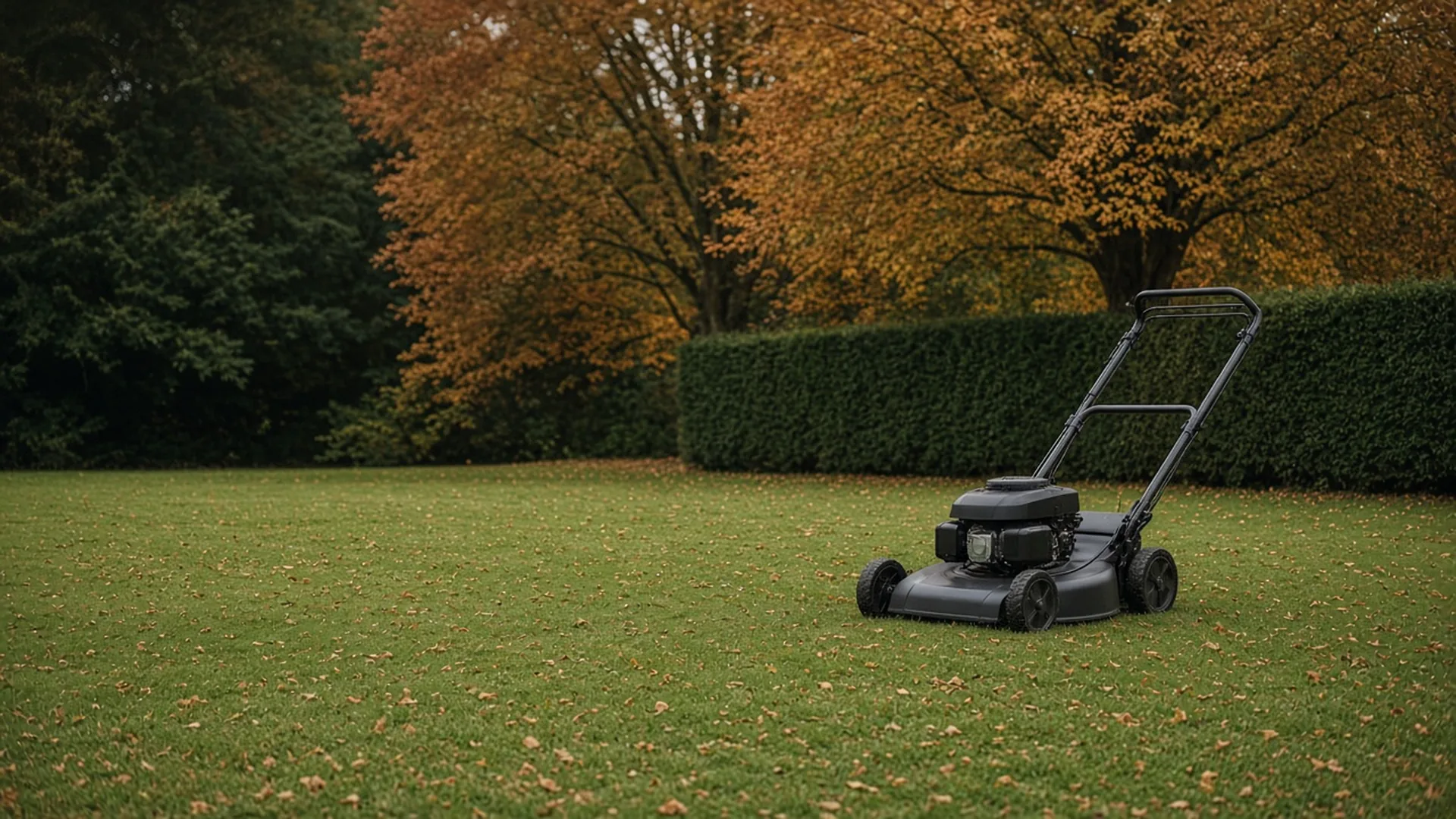
Mulching leaves with a mower
What Missouri and Virginia extension services say about mowing leaves into the lawn: how much, how wet, and with what mower.
Disclosure: We may earn a commission if you buy through links on this page. It does not change our guidance. Affiliate Disclosure
Mulching leaves means mowing fallen leaves into small pieces and leaving them on the lawn instead of raking or bagging them. The University of Missouri Extension (MU) and Virginia Cooperative Extension (Virginia Tech) say it can work without harming the grass, within limits on how wet and how deep the leaves are. This guide covers what they say, what mower you need, and the safety points. Start with your mower's manual: it says whether the mower can mulch and whether its bagger can come off.
Does mulching leaves harm the lawn?
MU says "University research has shown that mulching tree leaves into lawns has no detrimental effects on thatch or soil pH." It says the practice returns nutrients that deep tree roots took up to the soil surface, where grass roots can reach them.
Virginia Tech reports a Purdue University study in which mulched maple leaves had "no undesirable effects on turf quality or color, growth, thatch accumulation, soil pH, weed populations, or disease pressure." It says the leaves did not replace fertilizer.
Why not leave the leaves whole?
Virginia Tech says a thick layer of leaves blocks sunlight, which slows grass growth. It says the leaves also hold moisture in the grass, which raises the chance of turf disease. MU says that in autumn it is not always necessary to remove all fallen leaves, and that mowing more frequently can mulch them back into the lawn.
How many leaves can a mower handle?
The two sources set different limits, and we do not pick one. MU says to avoid mulching when the leaves are so deep, "more than a 2-inch-high layer", that they leave clumps that smother the grass. Virginia Tech cites research from Michigan State University that mulched up to 6 inches of leaves at a time, and says that "Multiple passes with your mower might be required to thoroughly chop leaves." It says the right amount depends on your mower. Mow more frequently as leaves fall, and watch for clumps left on the grass.
What about wet leaves?
MU says to avoid mulching leaves when they are wet. Virginia Tech says slightly moist leaves keep dust down, but that leaves that are too wet strain the engine and do not chop into small pieces that break down in the soil.
Do you need a mulching mower?
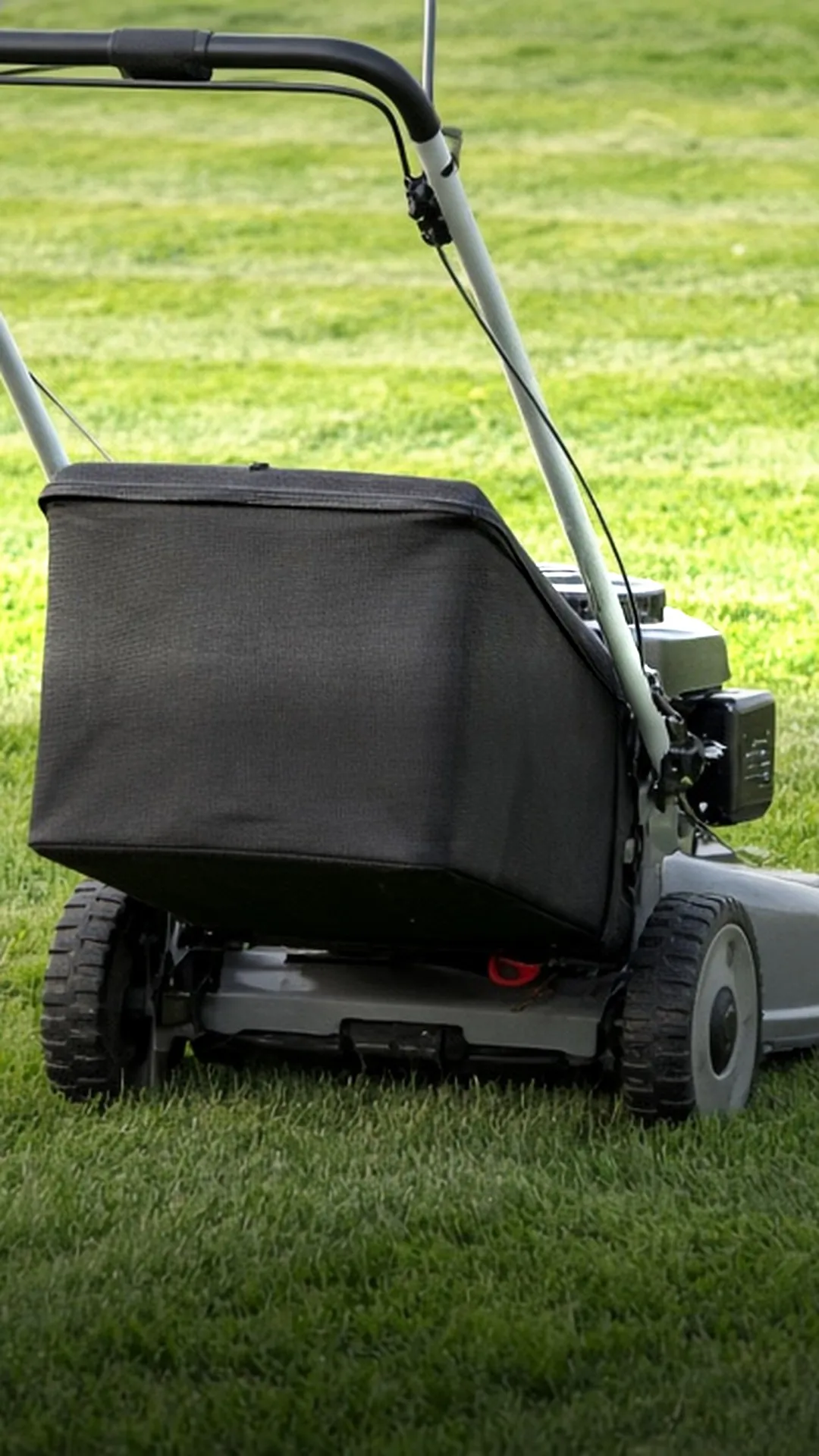
Not always. Virginia Tech says mulching mowers are preferred, but "almost any rotary mower unit can suffice." If your mower has a bagger and you want to remove it, MU says to read the maker's guidelines first, because on many mowers the bagging attachment affects mower safety. It says "Never assume your mower is still safe to operate after removing the bagging attachment." It says "Refer to your owner's manual or equipment dealer." Our mulching, bagging, and side discharge guide covers the three setups.
What safety points do the sources add?
Virginia Tech says to use a rotary mower to mulch leaves, "but not as a stump grinder or chipper/shredder." It says to walk the area first and remove sticks and limbs so no one is hurt by flying debris, and to wear goggles and a mask over your mouth and nose against debris and dust.
If leaves clog the discharge chute, the AAP says to turn the mower off and let the blades stop completely before you clear it. AAOS says never to use your hands or feet to clear debris; use a stick or broom handle instead.
How does this fit with grass clippings?
The idea is the same as leaving grass clippings on the lawn. Our grass clippings guide covers what Illinois Extension says about clippings and thatch. Virginia Tech says that if you mulch leaves through the fall, sharp blades and clean air and fuel filters help both the mulching and the engine. It also says these methods do not work for pine needles, which stay intact for months even when chopped.
Sources: University of Missouri Extension, “Don’t Bag It” Lawn Care (G6959); Virginia Cooperative Extension, “Leave” Them Alone: Lawn Leaf Management (SPES-729); AAOS OrthoInfo, Lawn Mower Safety; American Academy of Pediatrics, HealthyChildren.org, Lawn Mower Safety: Information for Families.
FAQ
General information only. Read the operator's manual before you mow. Keep children and pets indoors or well away from the area you mow, and never let a child ride on a mower as a passenger. The American Academy of Pediatrics says that, in general, children should be at least 12 years old to operate a walk-behind power mower safely and at least 16 to operate a riding mower safely. Before you clear, adjust, or service the blade area, turn the mower off, wait for the blade to stop, and disconnect the spark plug wire; on a battery or corded electric mower, follow the manual to disconnect its power. Refuel outdoors, only with the engine off and cool. Wear sturdy closed-toe shoes and eye and hearing protection. In an emergency, call 911.
Clippings, too
What Illinois Extension says about grasscycling.
